 1-800-537-2296
 sales@versitron.com



8-Channel Video to Fiber Installation Kit: Secure, Long-Distance CCTV Solutions
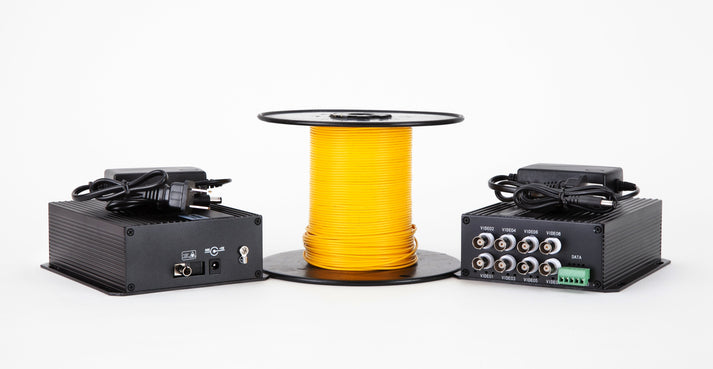
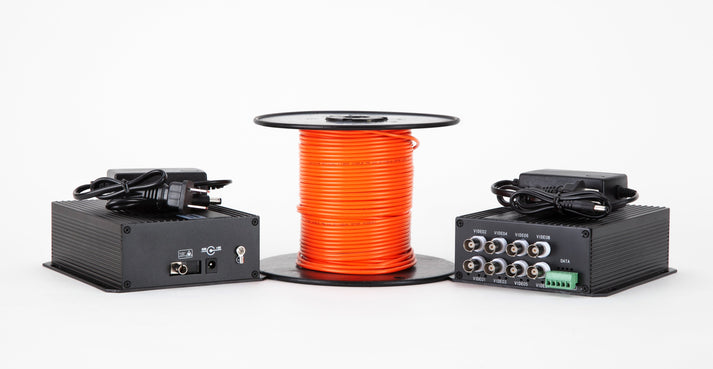
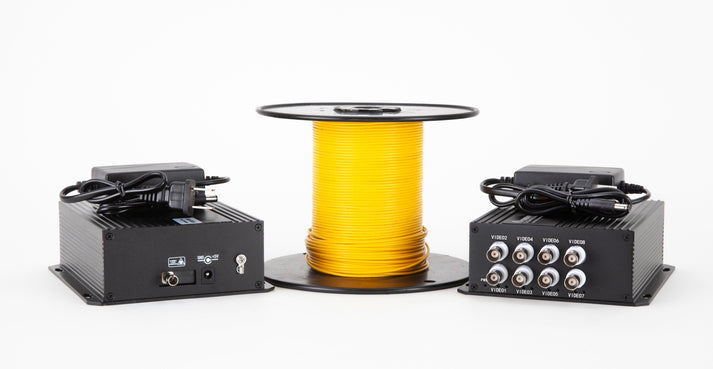
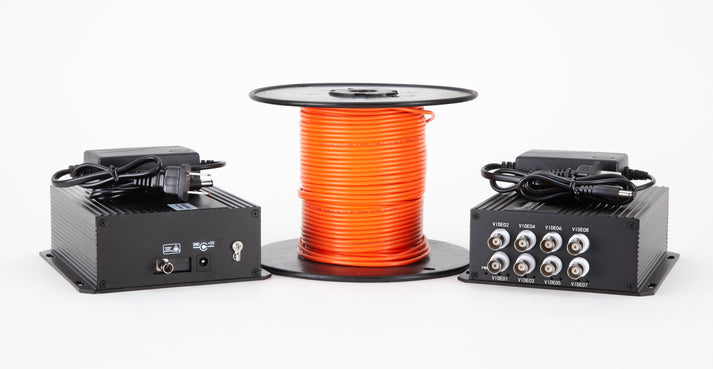
8-Channel Video to Fiber Installation Kits
Surveillance systems often need to transmit multiple camera signals across distances that exceed the practical limitations of traditional copper cabling. Large campuses, industrial facilities, transportation infrastructure, government installations, and perimeter security systems may have cameras located hundreds of meters or even kilometers from the central monitoring location.

For existing analog CCTV systems, fiber optic transmission provides an effective way to extend multiple video channels over long distances while maintaining reliable signal quality.
An 8-channel video to fiber installation kit allows multiple analog video signals to be transported over a fiber optic link between remote cameras and centralized monitoring or recording equipment. Depending on the configuration, the system may also support bidirectional data for applications such as compatible PTZ camera control.
By consolidating multiple video channels onto fiber, these systems can simplify long-distance surveillance infrastructure while providing the inherent advantages of fiber optic transmission, including immunity to electromagnetic interference and electrical isolation between connected locations.
The key is selecting the appropriate system for the application, including the correct fiber type and determining whether video-only transmission or additional data communication is required.
What Is an 8-Channel Video to Fiber Installation Kit?
An 8-channel video to fiber installation kit is designed to transport multiple analog video signals across a fiber optic connection.
A typical installation includes transmitting equipment at the camera side and receiving equipment at the monitoring location.
The basic signal path looks like this:
Analog CCTV Cameras → Video Transmitter → Fiber Optic Link → Video Receiver → DVR or Monitoring Equipment
Instead of running individual long-distance coaxial cables from every camera back to the central equipment room, the video signals can be transported across fiber between locations.
This architecture can be particularly useful when cameras are installed:
- Across large industrial facilities
- Along facility perimeters
- In remote buildings
- Throughout transportation infrastructure
- Across government campuses
- Near electrically noisy equipment
- At significant distances from monitoring centers
The system does not convert analog cameras into IP cameras. Rather, it provides a fiber optic transmission path for compatible analog video signals.
This distinction is important when selecting equipment for an existing surveillance architecture.
Explore Our 8-Channel Video to Fiber Installation Kits
Why Use Fiber for Analog CCTV Transmission?
Although many new surveillance systems use IP cameras, large numbers of analog CCTV systems remain in operation.
In some applications, replacing every camera, cable, recorder, and associated component may not be practical or necessary.
Fiber optic video transmission allows organizations to extend or maintain existing analog surveillance infrastructure while gaining several important transmission advantages.
Longer Transmission Distances
Traditional coaxial video transmission becomes increasingly challenging as distances grow.
Fiber can carry compatible video signals over significantly greater distances when used with the appropriate video transmission equipment.
This makes fiber useful for geographically distributed surveillance systems where cameras and monitoring equipment are separated by substantial distances.
Immunity to Electromagnetic Interference
Copper cabling can be affected by electromagnetic and radio-frequency interference.
This can be particularly problematic around:
- Industrial machinery
- Electrical equipment
- Power infrastructure
- Transportation systems
- Other electrically noisy environments
Fiber optic cable transmits information using light rather than electrical signals, making the transmission path immune to electromagnetic interference.
Electrical Isolation
Fiber does not provide an electrical connection between the transmitter and receiver locations.
This electrical isolation can be valuable when connecting equipment installed in separate buildings or areas with different electrical grounding conditions.
Multi-Channel Transmission
An 8-channel system allows multiple video signals to be transported through a consolidated fiber transmission architecture.
For installations with several cameras located in the same remote area, this can provide a more organized approach than extending numerous individual copper video connections back to the monitoring facility.
Understanding the Available 8-Channel Configurations
Not every surveillance installation has the same requirements.
The product configurations described in this family include options for:
- 8-channel video with data over single-mode fiber
- 8-channel video with data over multimode fiber
- 8-channel video-only transmission over single-mode fiber
- 8-channel video-only transmission over multimode fiber
These configurations allow system designers to select the appropriate solution based on transmission distance, installed fiber infrastructure, and whether auxiliary data communication is required.
Video-Only vs. Video-and-Data Systems
One of the first decisions when selecting an 8-channel video fiber kit is whether the application requires video transmission only or video plus data communication.
Video-Only Transmission
A video-only system is appropriate when the primary requirement is transporting fixed analog camera signals from one location to another.
Potential applications include:
- Fixed surveillance cameras
- Perimeter monitoring
- Building security
- Industrial monitoring
- Transportation surveillance
- Existing CCTV infrastructure
In these installations, the fiber system provides the transmission path between the camera location and the central monitoring or recording equipment.
Video Plus Data Transmission
Some surveillance applications also require a data communication path.
For example, compatible PTZ camera systems may use serial data communication for remote camera control.
Depending on the specific equipment configuration, data interfaces such as RS-422 or RS-485 may be used alongside the video transmission path.
This can allow the fiber system to carry analog video in one direction while providing the required control-data connection between locations.
Before selecting a video-plus-data system, verify:
- Required data protocol
- Direction of data communication
- Camera control interface
- Equipment compatibility
- Data connection requirements
The presence of a data channel does not automatically make the system compatible with every PTZ camera or control protocol. The complete system specifications must match.
Single-Mode vs. Multimode Fiber
Fiber type is another critical consideration when selecting an 8-channel video transmission system.
Multimode Fiber
Multimode fiber is commonly used for shorter-distance fiber connections.
It may be appropriate for applications such as:
- Connections within large buildings
- Industrial facilities
- Campus environments
- Existing multimode fiber infrastructure
If compatible multimode fiber is already installed between the camera location and monitoring facility, selecting a corresponding multimode video transmission kit can allow that infrastructure to be utilized.
Single-Mode Fiber
Single-mode fiber is generally used when significantly greater transmission distances are required.
Potential applications include:
- Large campuses
- Perimeter surveillance
- Transportation infrastructure
- Utility facilities
- Government installations
- Geographically distributed sites
The actual transmission distance depends on the specifications of the selected equipment and the complete optical path.
System designers should verify the supported distance rather than assuming that every single-mode fiber video system provides the same range.
Choosing Between Single-Mode and Multimode
The correct choice usually depends on two questions:
What fiber is already installed?
If an existing fiber infrastructure is available, selecting equipment compatible with that fiber may be the most practical solution.
How far must the video signals travel?
For new installations, the required transmission distance can help determine the appropriate fiber architecture.
Other considerations may include:
- Future network expansion
- Available fiber strands
- Connector types
- Existing patch panels
- Installation environment
The fiber type used by the transmitter and receiver must match the installed optical infrastructure.
The Role of ST Fiber Connectivity
The installation kits described in this product family use ST fiber connectivity.
ST connectors have historically been widely used in industrial, security, government, and legacy fiber optic installations.
When integrating an 8-channel video transmission system into existing infrastructure, verify:
- Fiber connector type
- Single-mode or multimode fiber
- Available fiber strands
- Patch-panel configuration
- Condition of existing fiber connections
If the installed fiber uses a different connector type, appropriate fiber patch cables or adapters may be required.
However, every additional optical connection can introduce some signal loss, so the complete fiber path should be considered when planning the installation.
Using Fiber to Extend Existing Analog CCTV Systems
One of the strongest applications for multi-channel video-over-fiber equipment is extending the useful life and geographic reach of existing analog surveillance systems.
An organization may already have:
- Functional analog cameras
- Existing DVR equipment
- Established monitoring workflows
- Large investments in surveillance infrastructure
The challenge may simply be that cameras need to operate farther from the central monitoring location.
Rather than replacing the entire surveillance architecture, a video-over-fiber system can provide the long-distance transmission segment.
For example:
Remote Cameras → Short Local Coax Runs → 8-Channel Fiber Transmitter → Fiber Backbone → Receiver → Existing DVR
This approach allows fiber to solve the distance problem without necessarily requiring replacement of the existing camera and recording infrastructure.
It can be particularly valuable for phased modernization projects where organizations are not ready to migrate an entire surveillance system at once.
Centralized Surveillance Across Large Facilities
Large sites frequently have cameras distributed across multiple buildings or remote areas.
Running individual coaxial connections from every camera directly to a centralized security room can become difficult as the physical size of the installation increases.
An alternative architecture is to group cameras by location.
For example, eight cameras in a remote section of a facility can connect locally to an 8-channel fiber transmitter. The video signals can then be transported across the fiber link to receiving equipment near the central monitoring system.
This architecture may be useful for:
- Manufacturing campuses
- Warehouses and distribution centers
- Transportation facilities
- Government campuses
- Utility installations
- Large commercial properties
The exact system design depends on camera locations, existing cabling, fiber availability, and monitoring requirements.
Perimeter Surveillance Applications
Perimeter surveillance is another application where fiber optic video transmission can provide significant advantages.
Cameras may be installed along:
- Facility boundaries
- Fencelines
- Entry and exit points
- Remote gates
- Parking areas
- Large outdoor properties
These locations may be far from the primary security operations center.
Fiber allows multiple compatible analog camera feeds from remote areas to be transported back toward centralized monitoring and recording equipment.
Its immunity to electromagnetic interference can also be advantageous where the fiber route passes near electrical infrastructure or other sources of interference.
For larger perimeter systems, multiple multi-channel video transmission links can be incorporated into the overall surveillance architecture based on camera density and geographic layout.
Industrial Surveillance and Electrically Noisy Environments
Industrial facilities can present challenging conditions for video transmission.
Manufacturing equipment, motors, power systems, and other electrical infrastructure can create electromagnetic interference that may affect copper-based signal transmission.
Because fiber optic cable does not carry electrical signals, it provides an effective transmission medium for connecting surveillance equipment across these environments.
Potential applications include:
- Manufacturing plants
- Processing facilities
- Utility sites
- Power infrastructure
- Warehouses
- Large industrial campuses
The fiber transmission equipment itself must still be installed within its specified environmental limits.
If transmitters or receivers will be exposed to extreme temperatures, moisture, dust, vibration, or other harsh conditions, appropriate equipment enclosures or environmentally rated products may be required.
The use of fiber alone does not automatically make the complete system industrial-hardened.
Government and Public-Sector Surveillance Applications
Government facilities and public-sector infrastructure often include surveillance equipment distributed across multiple buildings, entry points, parking areas, and remote locations.
Where existing analog CCTV equipment remains in operation, an 8-channel video-over-fiber system can provide a practical method for transporting multiple camera feeds back to centralized monitoring or recording equipment.
Potential applications include:
- Government campuses
- Municipal facilities
- Public safety facilities
- Correctional facilities
- Remote security checkpoints
- Perimeter surveillance
- Critical infrastructure sites
Fiber can be particularly useful when surveillance signals must travel between buildings because it provides electrical isolation and immunity to electromagnetic interference.
However, a video-over-fiber transmission system should not automatically be described as providing encryption or cybersecurity simply because it is deployed within a government or secure facility.
The system provides the physical transmission path. Any additional security requirements should be addressed through the overall surveillance architecture and appropriate security controls.
Transportation Surveillance Infrastructure
Transportation facilities frequently require cameras to operate across large geographic areas.
Potential applications include:
- Airports
- Railway facilities
- Transit stations
- Traffic monitoring infrastructure
- Ports
- Parking facilities
- Roadside surveillance
In an analog CCTV architecture, cameras may be grouped at remote locations and connected to multi-channel fiber transmitters.
The fiber link can then carry the video signals back toward a transportation operations center or security facility.
For example, cameras located throughout a remote section of a transportation facility could connect to an 8-channel transmitter through local coaxial cable. Fiber could then carry those signals across the facility to receiving equipment connected to the central recording system.
This approach can reduce the need for long individual coaxial cable runs while taking advantage of existing fiber infrastructure.
PTZ Camera Control with Video and Data Transmission
Some analog surveillance systems use pan-tilt-zoom cameras that require a separate control-data connection.
Depending on the camera and controller, serial interfaces such as RS-422 or RS-485 may be used to transmit commands between the monitoring location and the camera.
An 8-channel video-plus-data fiber system can help consolidate these connections by transporting video and compatible control data across the fiber link.
A typical architecture might include:
At the remote location:
- Analog PTZ cameras
- Coaxial video connections
- Compatible serial control connections
- Video-and-data fiber transmitter
Across the link:
- Fiber optic cable
At the monitoring location:
- Fiber receiver
- Video connections to the DVR or monitoring equipment
- Data connection to the compatible PTZ controller
Before deploying this architecture, verify the actual data capabilities of the selected equipment.
Important considerations include:
- Supported serial interface
- Data direction
- Baud rate
- Camera compatibility
- Controller compatibility
- Wiring requirements
The video fiber equipment provides the communication path, but the camera and control equipment must use compatible protocols and interfaces.
Centralized vs. Distributed Surveillance Architecture
The physical layout of the surveillance system should influence how multi-channel fiber transmission equipment is deployed.
Centralized Architecture
In a centralized surveillance architecture, video feeds from remote locations are transported back to a primary security or equipment room.
This approach can simplify:
- Centralized recording
- Operator monitoring
- Equipment maintenance
- Video management
An 8-channel fiber system can aggregate several remote camera signals for transmission toward the central location.
Distributed Architecture
Larger facilities may use multiple surveillance zones.
Each zone may contain local cameras and transmission equipment, with fiber links connecting the zones to one or more central monitoring locations.
This architecture can be useful when cameras are geographically spread across:
- Large campuses
- Industrial facilities
- Transportation systems
- Utility infrastructure
- Perimeter security networks
The appropriate design depends on the number of cameras, their physical locations, available fiber, and the organization of the monitoring infrastructure.
Planning an 8-Channel Video-over-Fiber Installation
Proper planning can prevent many common installation problems.
Before selecting equipment, document the complete signal path from the cameras to the final monitoring or recording equipment.
Important questions include:
- How many video channels are required?
- Are the cameras analog and compatible with the system?
- Is PTZ or other serial data communication required?
- What type of fiber is installed?
- What is the total fiber distance?
- What fiber connectors are used?
- Where will the transmitter and receiver be installed?
- What power is available at each location?
- Are additional channels likely to be needed later?
Answering these questions before installation helps determine whether the selected system matches the actual application.
Evaluating Fiber Distance and the Complete Optical Path
The maximum transmission distance specified for a video-over-fiber system should be considered alongside the actual fiber infrastructure.
The complete optical path may contain:
- Fiber optic cable
- Connectors
- Splices
- Patch panels
- Adapters
- Other passive optical components
Each connection can contribute some optical loss.
For longer links, system designers should verify that the complete optical path remains within the supported specifications of the transmitter and receiver.
The fiber type must also match the equipment.
A single-mode video transmitter and receiver should be used with the appropriate single-mode fiber infrastructure, while multimode equipment should be matched to compatible multimode fiber.
Installation and Cable Management Considerations
Multi-channel surveillance systems can involve substantial amounts of cabling at both ends of the fiber link.
Good cable management can make the system easier to install, troubleshoot, and maintain.
Installation practices should include:
- Clearly labeling each video channel
- Identifying fiber connections
- Documenting camera-to-channel assignments
- Protecting fiber from excessive bending
- Keeping connectors clean
- Providing appropriate strain relief
- Maintaining organized equipment racks or enclosures
For systems carrying PTZ control data, the corresponding data connections should also be clearly documented.
Good documentation becomes particularly important when multiple 8-channel systems are installed within the same facility.
Choosing Between Video-Only and Video-Plus-Data Models
The choice between these configurations should be based on actual system requirements.
A video-only model may be appropriate when:
- Cameras are fixed
- No serial control is required
- Only video signals need to cross the fiber link
A video-plus-data model may be appropriate when:
- Compatible PTZ cameras require serial control
- RS-422 or RS-485 communication is needed
- Other supported control data must travel between locations
There is generally little benefit in adding unnecessary system complexity if the application requires only video transmission.
Conversely, selecting a video-only system for an application that later requires PTZ control may require additional transmission equipment.
Future system requirements should therefore be considered during initial planning.
Choosing Between Single-Mode and Multimode Models
Fiber selection should be based primarily on the installed infrastructure and required transmission distance.
For existing systems, first determine whether the fiber plant is single-mode or multimode.
For new installations, consider:
- Required distance
- Future expansion
- Existing facility standards
- Available fiber infrastructure
- Long-term network planning
Single-mode fiber is generally preferred for longer-distance applications, while multimode fiber may be appropriate for shorter links where compatible infrastructure is available.
The transmitter and receiver must be selected for the same fiber type.
Common Mistakes When Selecting an 8-Channel Video Fiber Kit
Several common mistakes can result in compatibility problems or unnecessary installation difficulties.
Assuming the System Is for IP Cameras
These video-over-fiber systems are intended for compatible analog video signals.
IP cameras normally require Ethernet networking equipment and should not be treated as direct replacements for analog cameras within this architecture.
Choosing the Wrong Fiber Type
Single-mode and multimode systems are not interchangeable.
Verify the installed fiber before selecting the equipment.
Overlooking PTZ Control Requirements
If cameras require serial control, determine whether compatible data transmission is needed before selecting a video-only system.
Assuming Fiber Connector Compatibility
Verify the connector type used by the equipment and installed fiber infrastructure.
Ignoring Environmental Conditions
The use of fiber does not automatically make the transmitter or receiver suitable for harsh environments.
Verify operating temperature and environmental specifications separately.
Assuming the Equipment Provides Encryption
Transporting video over fiber does not inherently encrypt the signal.
Any encryption or cybersecurity requirements must be addressed separately.
Failing to Plan for Future Expansion
If eight channels are already required on the first day of operation, consider how additional cameras will be accommodated later.
A second transmission system or a different architecture may eventually be required.
A Practical 8-Channel Video-to-Fiber Selection Checklist
Before selecting an installation kit, answer the following questions:
Are the cameras analog or IP?
Confirm that the video format is compatible with the transmission equipment.
How many video channels are required?
Determine whether an 8-channel system provides the appropriate capacity.
Is serial control data required?
Identify any PTZ or other compatible data communication requirements.
What type of fiber is installed?
Determine whether the link uses single-mode or multimode fiber.
How far must the signals travel?
Verify that the complete fiber path is within the supported transmission range.
What fiber connectors are used?
Confirm compatibility with the equipment and existing infrastructure.
Where will the equipment be installed?
Evaluate operating temperature and environmental conditions.
What equipment is located at each end?
Confirm compatibility with the cameras, DVRs, monitors, and control systems.
Will the surveillance system expand?
Consider future camera requirements when designing the architecture.
When Video over Fiber Is the Right Solution
An 8-channel video-to-fiber installation kit can be particularly useful when an organization has a functioning analog surveillance system but needs to overcome the distance or environmental limitations of copper transmission.
It may be a strong fit when:
- Existing analog cameras remain operational
- Multiple cameras are located in the same remote area
- Long transmission distances are required
- Fiber infrastructure is already available
- Electromagnetic interference is a concern
- Electrical isolation between locations is beneficial
- Compatible PTZ control must travel alongside video
In these situations, fiber can extend the capabilities of existing surveillance infrastructure without requiring an immediate migration to an entirely new IP-based system.
When to Consider a Different Architecture
Video-over-fiber equipment is not necessarily the right solution for every surveillance deployment.
For a completely new system, organizations may also evaluate modern IP surveillance architectures based on factors such as network infrastructure, camera requirements, scalability, cybersecurity, and centralized management.
An Ethernet-based fiber network may be more appropriate when the application uses IP cameras.
Similarly, if surveillance requirements have expanded far beyond the capabilities of the existing analog system, a broader modernization strategy may make more sense than continuing to add transmission equipment to legacy infrastructure.
The decision should be based on the complete application rather than assuming that either analog or IP technology is universally better.
Conclusion
8-channel video-to-fiber installation kits provide a practical solution for transporting multiple compatible analog CCTV signals across fiber optic infrastructure.
By consolidating several video channels onto a fiber transmission link, these systems can help extend surveillance coverage across large facilities, campuses, industrial sites, transportation infrastructure, government installations, and remote perimeter locations.
The correct configuration depends on the requirements of the application.
Video-only models can support straightforward fixed-camera transmission, while video-plus-data configurations can provide a communication path for compatible serial control applications. Single-mode and multimode options allow the transmission equipment to be matched to the installed fiber infrastructure and required distance.
Successful deployment begins with understanding the complete surveillance architecture: the camera technology, number of video channels, fiber type, transmission distance, connector requirements, data interfaces, environmental conditions, and future expansion needs.
For organizations maintaining or extending existing analog CCTV infrastructure, multi-channel video-over-fiber systems can provide a reliable way to overcome distance limitations while taking advantage of fiber's immunity to electromagnetic interference and electrical isolation.
By selecting the appropriate configuration for the actual application, system integrators can build a cleaner, more scalable transmission architecture while preserving existing surveillance equipment that continues to meet operational requirements.


