 1-800-537-2296
 sales@versitron.com



Why Video Distribution Amplifiers Are Essential for CCTV and HD Video

Imagine trying to display security footage across multiple monitors or distribute a live video feed to several rooms, only to encounter flickering screens, distorted images, or inconsistent picture quality. In environments such as security control rooms, broadcast studios, and digital signage installations, maintaining a clear and reliable video signal across multiple displays is essential.
A video distribution amplifier helps solve this problem by receiving video signals and distributing them to multiple outputs while maintaining signal strength and image quality. VERSITRON video distribution amplifiers provide professional solutions for CCTV surveillance, HD video distribution, broadcast operations, and other applications requiring reliable multi-channel video distribution.
This article explains how video distribution amplifiers work, the video formats they support, common installation configurations, and how to select the right solution for your application.
What Is a Video Distribution Amplifier?
A video distribution amplifier is an electronic device that receives one or more video signals and distributes them to multiple output channels. Unlike a basic passive splitter, which divides a signal without actively compensating for signal loss, an active video distribution amplifier is designed to maintain signal strength across its outputs.
This is particularly important in professional video installations where a single camera or video source must be displayed on several monitors, recording systems, or other destinations.
For example, a CCTV video distribution amplifier can distribute surveillance camera feeds to multiple viewing stations in a security control room. By maintaining signal integrity across the connected outputs, it helps provide consistent video quality throughout the system.
Why Signal Amplification Matters
Video signals, particularly analog signals transmitted over coaxial cable, can experience attenuation as they travel through cables and distribution connections. Without proper signal management, this can contribute to:
- Blurred or noisy images
- Reduced signal strength at downstream displays
- Inconsistent picture quality across multiple monitors
- Unreliable video distribution in larger installations
A video distribution amplifier helps address these issues by actively distributing the incoming video signals to multiple outputs. This makes it useful in CCTV installations, broadcast environments, and other systems where video must be delivered to several destinations.
Amplification can help compensate for distribution-related signal losses, although actual transmission distance and performance depend on the equipment, cable type, video format, and installation.
VERSITRON Video Distribution Amplifier Product Line
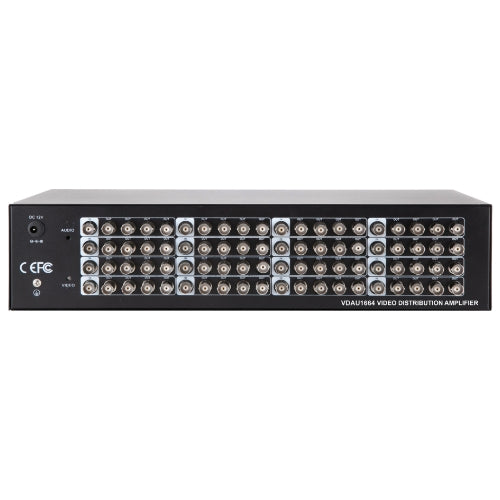
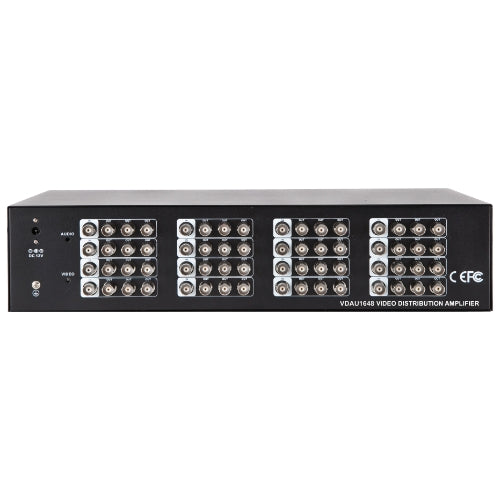
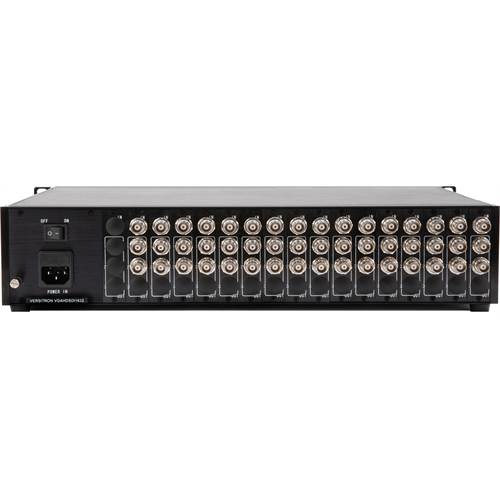
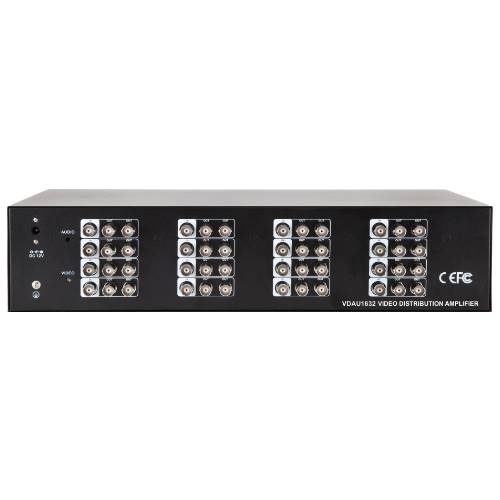
VERSITRON offers video distribution amplifiers designed for professional video distribution applications. The product lineup includes configurations supporting 16 video inputs with 32, 48, or 64 outputs, as well as an HD-SDI distribution amplifier.
These products provide options for installations requiring different numbers of video inputs and outputs.
Explore VERSITRON Video Distribution Amplifiers
Supported Video Interfaces
Video distribution amplifiers must be compatible with the video format used by the connected cameras and equipment. VERSITRON's video distribution amplifier product line includes solutions for several analog and HD video interfaces.
Supported interfaces include:
- Analog CCTV: Used in traditional surveillance systems and other analog video installations.
- HD-CVI: High-definition video transmission technology commonly used in surveillance applications.
- HD-TVI: A high-definition analog video format used in compatible CCTV systems.
- HD-AHD: An analog high-definition video interface used in surveillance installations.
- HD-SDI: A digital video interface used in professional video and broadcast applications.
Selecting the correct amplifier requires matching the video format to the specific model. Not every amplifier necessarily supports every listed interface, so verify compatibility in the individual product specifications before purchasing.
Installation and Design Benefits
VERSITRON video distribution amplifiers are designed to integrate into professional video systems and provide flexible installation options.
BNC Connectivity
BNC connectors provide a familiar connection method for compatible coaxial video equipment. This makes integration with existing CCTV and professional video infrastructure more straightforward.
Rack-Mount and Desktop Installation
Depending on the model, video distribution amplifiers are available in configurations suitable for 19-inch rack installations or desktop placement in control rooms and other equipment areas.
Rack-mount configurations are particularly useful in centralized surveillance and broadcast facilities where multiple video distribution devices are installed together.
Multiple Input and Output Channels
With configurations supporting up to 16 video inputs and as many as 64 outputs, these amplifiers can accommodate installations that need to distribute numerous video feeds.
For example:
- A 16-input, 32-output amplifier can distribute multiple camera feeds to several monitoring locations.
- A 16-input, 64-output amplifier can support larger surveillance or video distribution installations.
Integration with Fiber Optic Systems
Video distribution amplifiers can also be incorporated into systems that use fiber optic transmission equipment. In these applications, compatible video-to-fiber converters or other optical transmission equipment can provide connectivity over longer distances than traditional coaxial cabling.
The specific equipment required depends on the video interface and the design of the overall system.
Applications of Video Distribution Amplifiers
Video distribution amplifiers are used in a variety of professional environments where video signals must be delivered to multiple displays or equipment locations.
Broadcasting and Video Production
Broadcast facilities and production environments often need to distribute video feeds to multiple monitors and equipment stations.
Common applications include:
- Distributing video signals in television and broadcast operations.
- Supporting outside broadcast trucks and mobile production facilities.
- Sending video feeds to multiple monitors in editing and post-production suites.
Security and Surveillance
CCTV systems frequently require the same camera feed to be displayed or monitored at multiple locations.
A video distribution amplifier can help:
- Distribute camera feeds to multiple security monitors.
- Send video signals to centralized control rooms.
- Provide multiple viewing points for surveillance personnel.
- Support larger installations with numerous camera inputs and display outputs.
Government and Judicial Facilities
Government buildings, courtrooms, and other public-sector facilities may need to distribute video evidence or surveillance feeds to multiple displays.
Applications include courtroom video distribution, evidence presentation, and centralized security monitoring.
Education and Audiovisual Systems
Schools, universities, training centers, and other educational facilities use video distribution equipment to deliver content to multiple displays.
Potential applications include:
- Lecture halls and classroom video systems.
- Video production and audiovisual training labs.
- Lecture capture and replay systems.
- Campus-wide video distribution installations.
Commercial and Corporate Environments
Businesses may need to distribute synchronized video content throughout offices, conference rooms, lobbies, and other shared spaces.
Video distribution amplifiers can support corporate audiovisual systems and centralized video monitoring applications.
Cable and Satellite Operations
Cable headends and satellite facilities use video distribution equipment to route video signals to multiple destinations.
Compatible amplifiers can support video distribution over coaxial connections in these environments.
Museums, Exhibits, and Public Displays
Museums and exhibit facilities often use multiple displays to present synchronized video content throughout different areas. Video distribution amplifiers can help distribute source signals to the required screens and display equipment.
Why Choose VERSITRON Video Distribution Amplifiers?
Professional Video Distribution
VERSITRON offers video distribution amplifier configurations designed for professional CCTV, broadcast, and audiovisual applications. Multiple input and output options help accommodate installations of different sizes.
Reliability for Continuous Operation
Video distribution equipment used in surveillance and professional AV environments may be required to operate continuously. VERSITRON products are designed for demanding applications where dependable video distribution is important.
Lifetime Warranty
VERSITRON video distribution amplifiers are backed by a lifetime warranty, providing additional confidence in long-term product support and reliability.
Flexible System Integration
With multiple configurations, supported video interfaces, and installation options, VERSITRON video distribution amplifiers can be incorporated into a variety of existing and new video systems.
Frequently Asked Questions
What does a video distribution amplifier do?
A video distribution amplifier receives one or more video signals and distributes them to multiple outputs. Its active circuitry helps maintain signal strength and video quality across the connected destinations.
What is the difference between a video splitter and a video distribution amplifier?
A passive video splitter divides an incoming signal among multiple outputs without actively amplifying it. An active video distribution amplifier is designed to maintain signal strength across its outputs, making it better suited to many professional multi-display installations.
How many outputs can a VERSITRON video distribution amplifier support?
VERSITRON offers configurations with 32, 48, and 64 video outputs, depending on the model.
Can video distribution amplifiers be used with CCTV cameras?
Yes. Compatible video distribution amplifiers can distribute CCTV camera signals to multiple monitors or other video destinations. The amplifier must support the video format used by the cameras and connected equipment.
Do VERSITRON video distribution amplifiers support HD video?
VERSITRON offers Analog/HD interface models as well as a dedicated HD-SDI model. Check the individual product specifications to confirm compatibility with the specific video format in your installation.
Can video distribution amplifiers be used with fiber optic systems?
Yes. They can be integrated into systems using compatible video-to-fiber converters and optical transmission equipment. The required equipment depends on the video format and system configuration.
Conclusion
Video distribution amplifiers play an important role in installations where video signals must be distributed to multiple displays without sacrificing signal quality. From CCTV surveillance and broadcast facilities to courtrooms, educational institutions, corporate environments, and public displays, the right amplifier helps provide dependable video distribution.
VERSITRON offers multiple video distribution amplifier configurations, including 16-input models with 32, 48, and 64 outputs, along with an HD-SDI solution. Backed by a lifetime warranty, these products provide professional options for a wide range of video distribution requirements.
Explore Our Products
-

Video Distribution Amplifiers - Analog/HD Interface, 16 video inputs, 64 video outputs
View Details -

Video Distribution Amplifier – Analog/HD Interface, 16 Video Inputs, 48 Video Outputs
View Details -
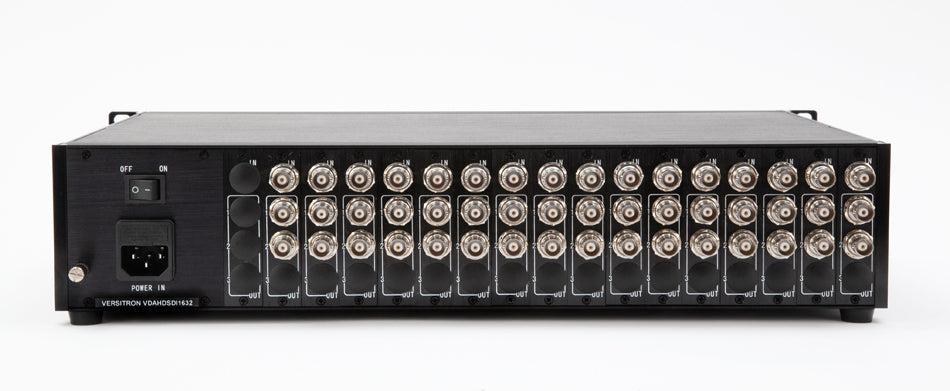
Video Distribution Amplifier - HDSDI
View Details -

Video Distribution Amplifier – Analog/HD Interface, 16 Video Inputs, 32 Video Outputs
View Details


